 Skip to content



Understanding dog body language…
…is crucial for any dog parent.
Here you’ll find simple, clear guidance to help you better understand your dog’s emotions, stress signals, and communication.
By knowing what your dog is trying to tell you when you see their body language you can provide reassurance when they need it, or prevent unnecessary escalations. You will know when to progress in training or when to take a break.
Click the images below to check out the body language handouts, and sign up below to be sent them for future reference (for free!) along with some extra info that I often share with clients to give a good grounding in this very topic!
Why your dog’s body language matters
Dogs communicate with us all the time through their body language, facial expressions, posture, movement, and behaviour.
Learning to recognise signs of stress, fear, discomfort and emotional overwhelm can make a huge difference to your dog’s wellbeing and your relationship together.
Understanding dog body language helps you:
- recognise when your dog is feeling worried or uncomfortable
- prevent situations from escalating by responding before growling, snapping or barking happens
- make safer choices around dogs and people
- support your dog during training; know when to move on or when to pause
- build trust and confidence
Many subtle stress signals in dogs are commonly missed or misunderstood. These handouts are designed to help dedicated dog guardians like you feel more confident reading their dog and understanding what their behaviour may be communicating.
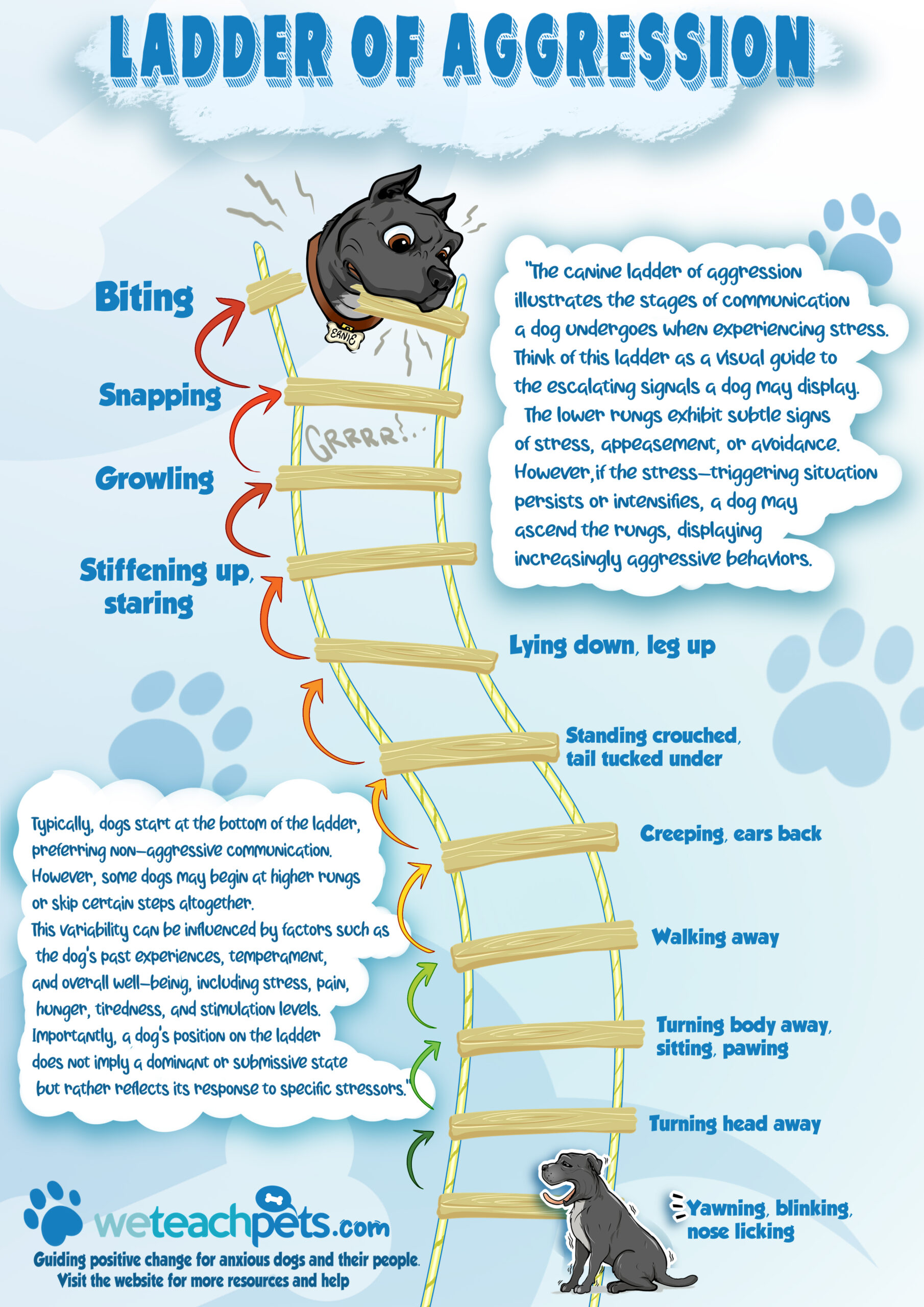
What is the canine ladder of aggression?
The canine ladder of aggression (sometimes called the dog ladder of aggression) is a visual representation of how dogs communicate discomfort, stress, fear, or conflict.
Before a dog growls, snaps, or bites, they will often show many earlier warning signs. They can be subtle, so aggression can feel like it comes out of the blue. When you know what to look for, though, you will start to notice them more.
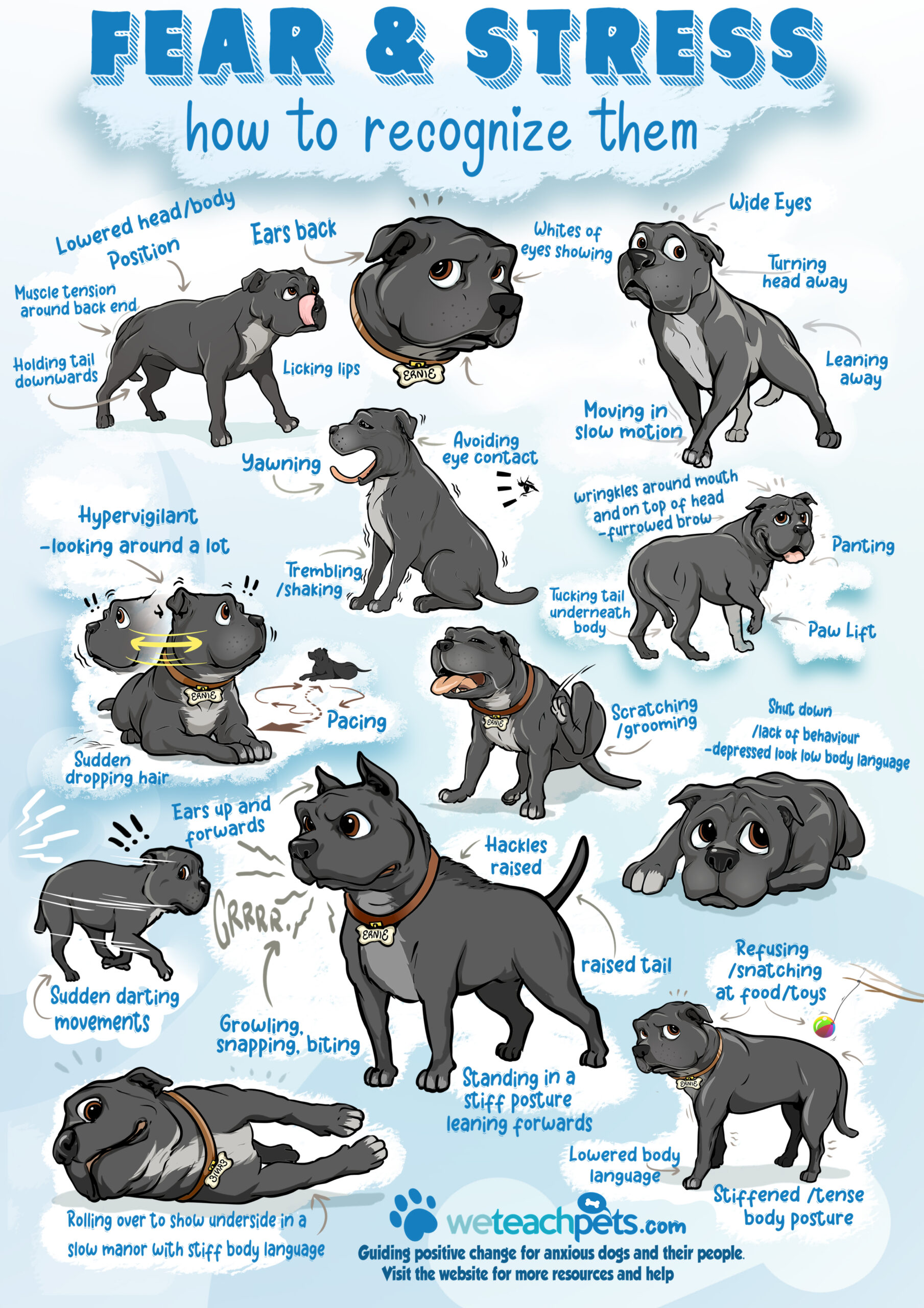
These can include:
- turning away
- lip licking
- yawning
- freezing
- leaning away
- moving away
- whale eye
- crouching
- paw lifting
- tension in the body
When these earlier signals are missed, ignored, or punished, a dog may feel the need to move further up the ladder in order to create space or communicate more clearly.
Learning about the ladder of aggression can help prevent bites, improve dog welfare, and help you to respond with greater understanding.
Click the images below to see the full handouts for free, and sign up to get them to your inbox for safe keeping and for more dog behaviour content.
Signs of fear, stress and anxiety in dogs
The canine ladder of aggression
These free dog body language handouts are designed to give you practical, easy-to-understand visual guidance that you can return to whenever you need.
Subscribers also receive occasional updates, training tips, behaviour insights, and practical dog wellbeing information.
You can find out more about me here, so you know who is sending you emails!
I love when people feel they want to hear more, so I really hope you’ll sign up and join me as we learn more about our wonderful companions together. See you there!
