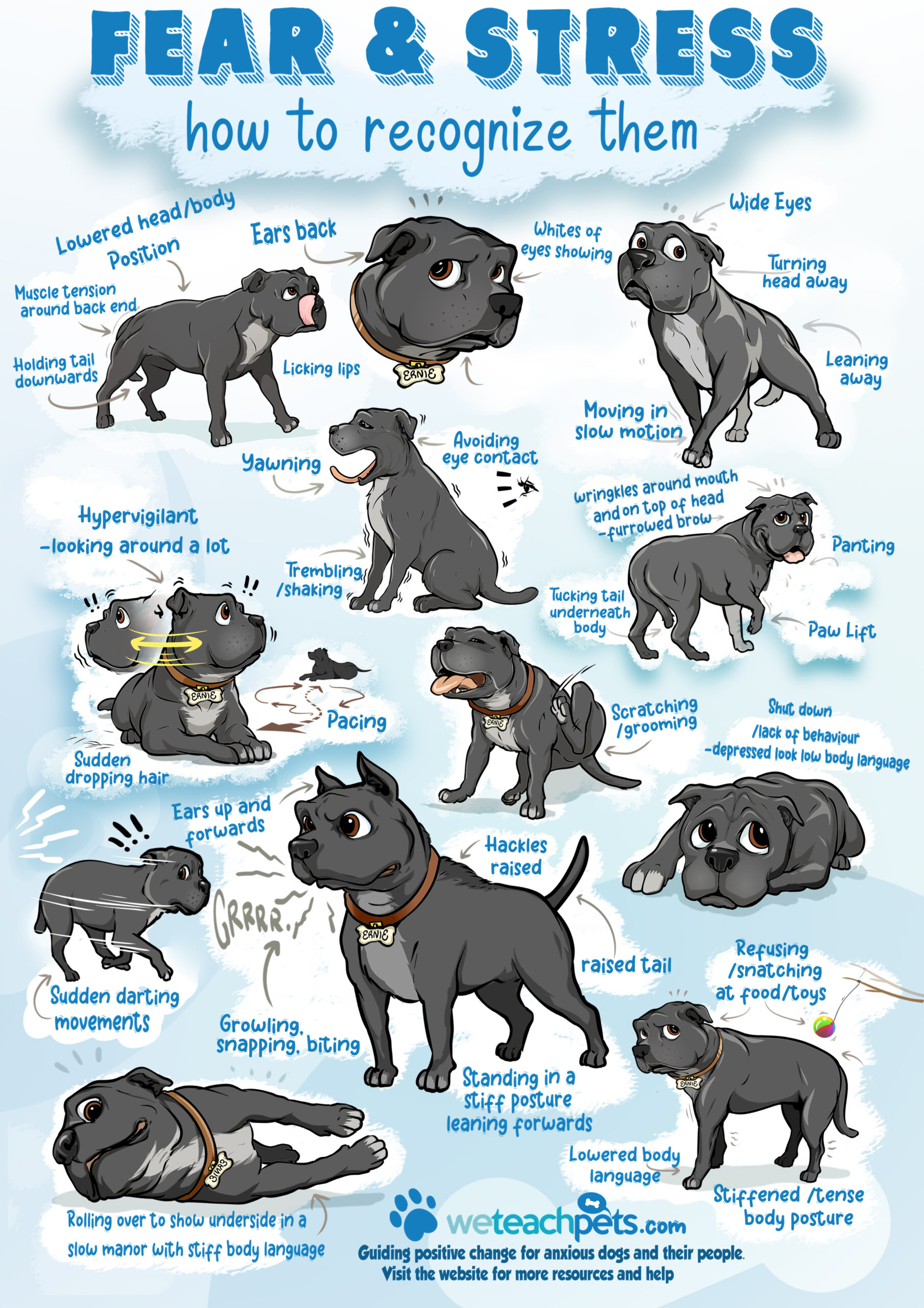
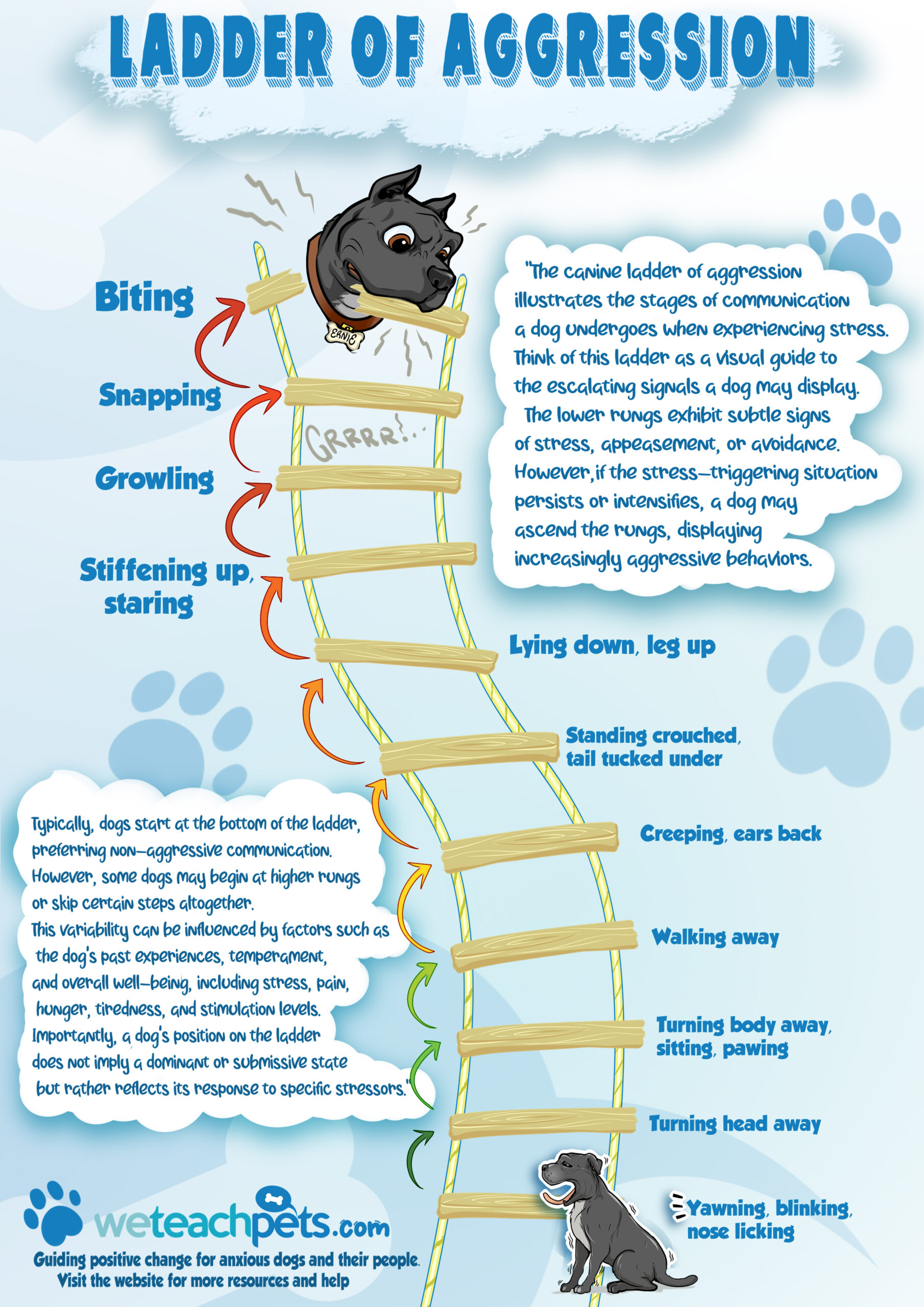
Dog Body Language Handouts
Our dogs are constantly communicating with us, even if they don’t say a word. Learning to read dog body language is one of the most important skills you can develop as a pet guardian. Subtle changes in posture, facial expression, tail movement, or ear position can tell you how your dog is feeling. Whether they’re relaxed, worried, or stressed or at risk of showing aggression.
Being able to recognise these signs can transform your relationship with your dog. It helps you respond in ways that make them feel safe and understood. It prevents situations from escalating, and supports training and behaviour work. Many behaviour problems, from reactivity to fear-based issues, are easier to manage when you can spot the early warning signs in your dog’s body language.
To help you get started, I’ve created two free resources you can download today. The first is common signs of stress or fear to look out for. Secondly you have the ladder of aggression. If you see low level signs, that doesn’t mean your dog is aggressive. This means that if you spot these signs your dog needs help so that they don’t feel the need to escalate into more proactive or aggressive behaviour.
If your dog does show aggressive behaviour at times, this doesn’t mean your dog is an aggressive dog, or a bad dog, just that they need some additional help in those situations.
Understanding dog body language doesn’t just help with training – it strengthens your bond. When your dog feels listened to, they become more confident and relaxed in everyday life. Whether you’re preparing for a vet visit, introducing your dog to new people or pets, or just enjoying playtime, being able to “speak dog” makes all the difference.
Download your free Dog Body Language resources here and start seeing the world from your dog’s point of view.