

Think your dog might have separation anxiety?
Separation anxiety can be a stressful and frustrating issue for you and your dog to live with.
You might feel trapped in your own home or preoccupied with the distress you’ve left behind.
Learn how to effectively teach your dog to feel safe home alone, so you can both experience the freedom and independence you dream about.

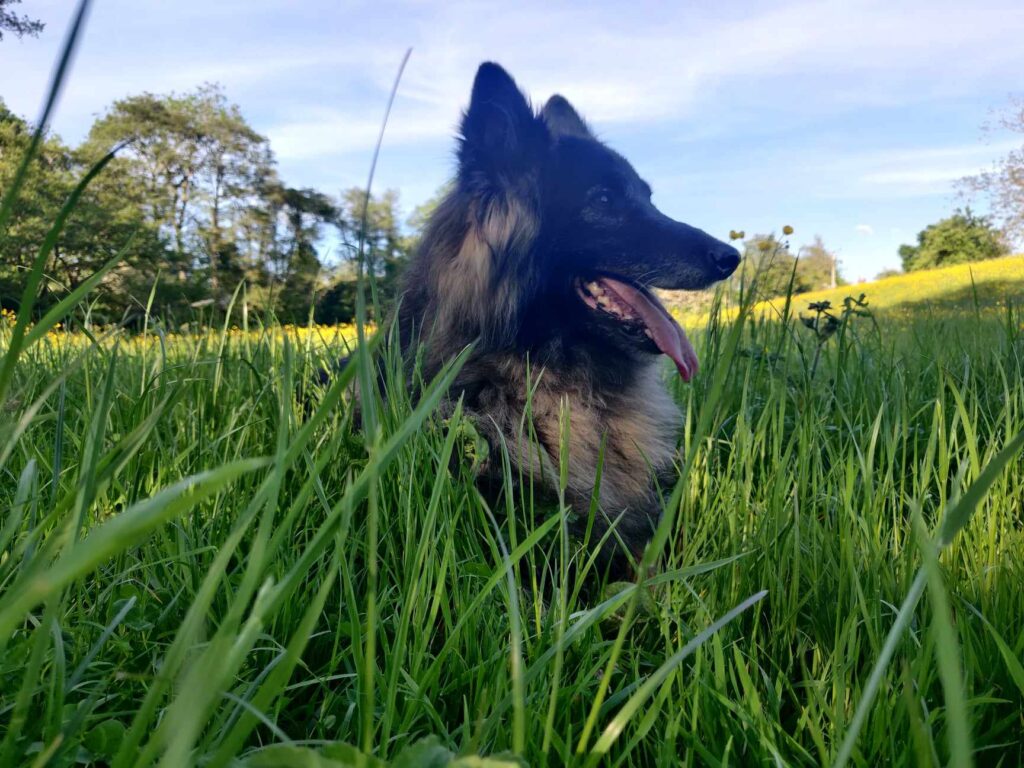
Luna, one of my separation anxiety dogs!
Separation anxiety is distressing for your dog, and for you too.
- Barking, whining or howling
- destructive behaviour
- pacing, panting, drooling, shaking
- or simply sitting and staring at the door
are some common signs that your dog might have a problem.
If you’re on this page you are probably worried about your dog’s behaviour and wellbeing when you leave the house.
Maybe you rarely leave the house at all now to avoid these issues.
If you’d love to be able to leave the house without a military operation, and without spending your time away from your dog watching the upset unfold on camera, then this is the place for you.
As much as you love your dog they can’t always be with you, and you would love to be able to go for outings safe in the knowledge that your dog is just chilling at home without you.
You’ve probably already tried
- the calming sprays
- leaving your dog with treats or favourite toys
- leaving your worn t-shirt
- left the radio on
Many of my clients have tried these, and more, without success. We often need to look deeper than these, and address the underlying emotional state of your dog.
The packages below are a supportive, comprehensive and simple path to teaching your dog to relax whilst you’re away from them.
My own personal experience with separation anxiety training
My own dog, Max, developed separation anxiety when he was younger after a change in my working pattern. I had no idea there was a problem until my neighbour alerted me that he was barking and howling – for hours – any time I was out of the house.
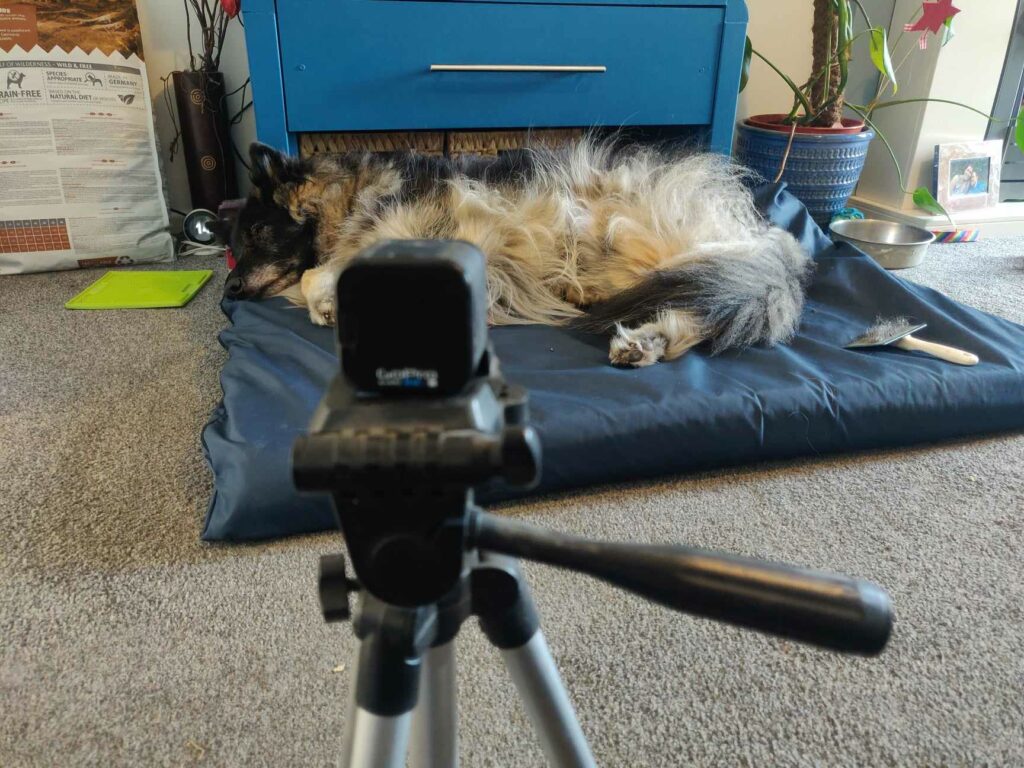
I set up a camera and sure enough it was almost constant, for hours. He was panting heavily, pacing, barking and full on howling. I was mortified, and so distressed seeing my beloved dog so upset.
I became trapped between guilt if I left him, and frustration when I had to skip things to stay home.
Equally, I knew it wasn’t his fault. I empathised with him and needed to help him through this so we could both be free of it.
What did I do for Max’s separation anxiety?
There’s typically no quick fix or fast forward.
With patience and consistency he went from being a total wreck when left alone to being able to settle for longer and longer periods.
I remember the great feeling of initially being able to drive down the road, around the roundabout and back and him still be resting!
Then my first walk to the post box, trip to the local shop, out to do the weekly shop.
Eventually for hours whilst visiting clients and doing chores. I went from watching the camera constantly, worrying about every small movement, to knowing I could put my phone away and get on with my day.
It felt like freedom for both of us.

Along with the peace of mind and freedom that comes with teaching your dog to relax when home alone, your pet insurance may reimburse the fees for your dog’s separation anxiety training!
Separation Basics Package
£450
Separation Premium Package
£595
Separation anxiety can feel overwhelming. These programmes mean I’m with you every step of the way.
Separation anxiety has no quick fix, but however long it takes, you have access to the support you need. Many insurance policies will even reimburse you the fees.
Once you’ve completed your initial package, if you want to add on more support, we have options available for you.
Separation Anxiety Training FAQs
1. Why is the separation anxiety training done online? Can that really work?
The separation anxiety training is all done online – but don’t worry! This is a great thing. Pre-pandemic I did in-person separation anxiety training and still needed assessments done by video. Me being there means the dog is not alone! You and a visitor all trudging in and out of the house adds stress or excitement that gets in the way of the calmness we are aiming for. Through video calls and, if needed, temporary shared access to camera apps, I can see your dog exactly as you do, can communicate with you without your dog knowing I’m there and guide you through the process with your dog settled and none the wiser. This makes it far more accurate and success rates have dramatically increased.
2. Do I need to be tech savvy to do this training?
Definitely not! We can get started with Zoom, a simple, free, online app to get us going. I’ve had lots of people who started out feeling unsure but soon got to grips with it. I’ll help you out if you’re struggling; we can have a test meeting to check everything works before we get going. There’s no need to spend lots of time or money on extravagant camera equipment. There are lots of really simple pet cams on the market these days if you are happy to go down this route.
3. How much time do I need to set aside for separation anxiety training?
I ask that you set aside 20-30 minutes per day, 5 days a week to start with. Obviously, once you are able to leave your dog for longer then there are going to be days where you will need longer. But you will soon be able to use these times to do chores or go for walks or shopping etc. It will become usable time. You won’t necessarily need to be doing long absences every day, it may be just once or twice a week depending on your goals.
I also know that despite best laid plans life doesn’t always allow for our ideal timeframes for training. So if we need to be more flexible in our approach then we can be. It’s not a problem.