


If you really think about it, Christmas is a bit of a strange time. We bring trees indoors, we put lights up everywhere, strange decorations everywhere, reindeer ornaments appear in people’s gardens. There are ore tempting foods and boxes around that people guard ferociously. People, groups of people, come visiting, and delivery people attempt invasions even more frequently. It’s a confusing time to be a dog at Christmas. Preparing our dogs for an enjoyable Christmas to take the stress off us and them is well worth it.
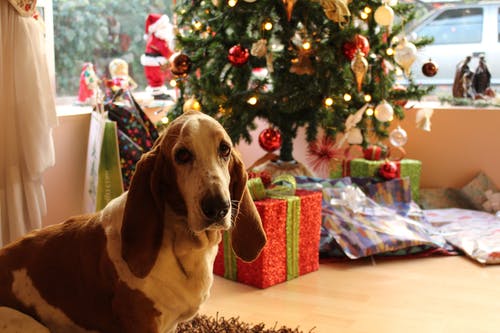
Preparing for Visitors
If your dog is at all concerned by visitors to the house or general noise or busy-ness this is especially important. Maybe they love people but get easily over-stimulated.
- Create a safe space. Provide safe food toys or chewables, favourite bed, calming background noise. Introduce gates/crates/play pens etc early on so your dog is comfortable with their separate area. Take it with you if you go visiting. Consider leaving your dog at home for a peaceful evening for them.
- Desensitise to the door knocking/doorbell. Record the sound of the doorbell, or make a knocking sound, and pair this sound with a tasty treat. Repeat over and over. You could also encourage them to head to their safe space for the treat whenever the sound happens.
- Muzzle training. Safety first! If you have any doubts at all about how your dog may react to visitors then get your dog comfortable with wearing a muzzle around the house for safety. This protects your dog and your visitors. Check out our muzzle training video here to get started. If you do feel there is any chance of your dog showing aggression then reach out to a qualified behaviourist. We can help to guide you through the best strategies for your dog.
- Accustom your dog to wearing a harness and lead indoors. If your dog is anything but totally welcoming and calm then consider introducing them on lead. This will stop jumping up, or other unwanted behaviour. Practice walking around the house with your dog on lead and rewarding calm behaviour so they don’t get over-excited at the sight of their lead.
- Stock up on long lasting treats and toys. Give your pet lots of positive and calm things to do to occupy themselves. Try to have walked or played with them before visitors arrive so they are ready for a snooze. If your dog may resource guard, always pop them behind a barrier with their treats.
Visitor & Dog Introductions
How best to introduce your visitors will vary from dog to dog. If you have any worries, contact a suitable professional to help you make a plan. Some general guidance could include:
- Many incidents with dogs and visitors occur around the front door. Pop your dog behind a secure barrier whilst your visitors enter the house until everyone is sitting calmly.
- Make sure your visitors know the rules when it comes to interacting with or being around your dog.
- Use leads, muzzles, and barriers as needed to gradually introduce your dog over as long a period as necessary. Give them regular breaks. Some dogs are better to remain behind a barrier throughout your visitors’ stay.
- Become familiar with your dog’s body language so you can better understand your dogs feelings and needs in any moment. Check out this article by the Blue Cross https://www.bluecross.org.uk/pet-advice/be-safe-dogs
- Remember that if people are having a few drinks they may start to behave differently. Even with the best of intentions their change in behaviour, or even just the volume of their voice, can be very disconcerting for some dogs. Consider encouraging your dog away for breaks in their safe space.
Christmas Decorations
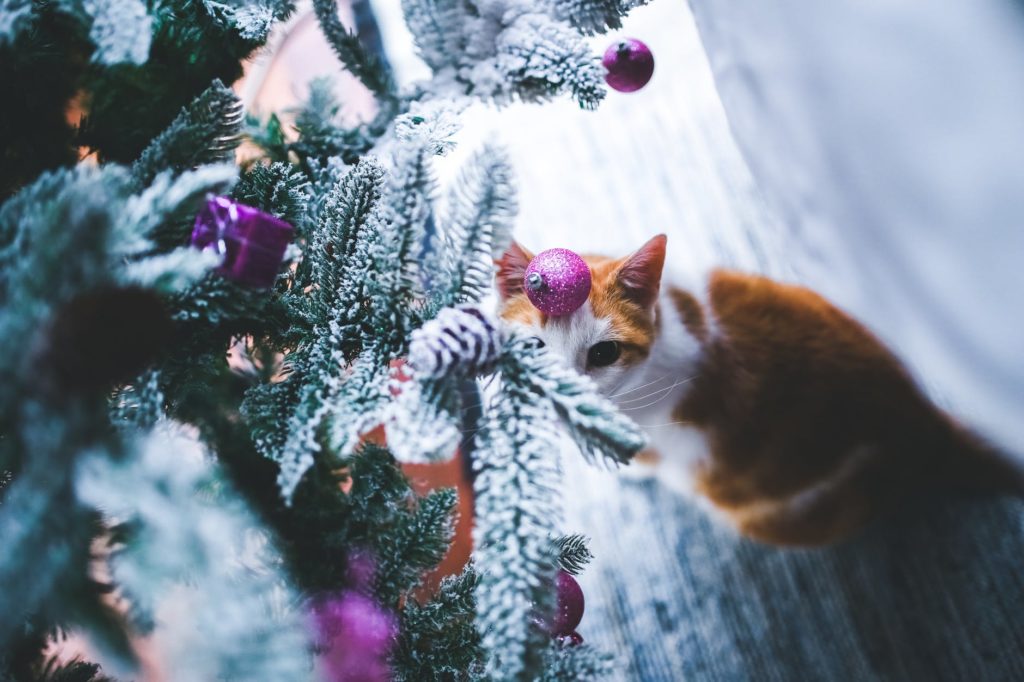
Cats and dogs can find Christmas decorations intriguing! As funny as it can seem to start with, it can result in disaster if they end up getting tangled in the tree or lights, or pull the whole tree over. Decorations can be a risk to a dog at Christmas (and cats too, though they seem to mostly be less likely to eat them!).
Introduce your pet to the tree gradually. Put boisterous dogs on lead, or put up a play pen around the tree to stop access to tempting presents and decorations.
Provide alternative activities and reward appropriate behaviour. Don’t leave your pet unsupervised if they may play with or even wee on this natural-style new plant (*cough* handy new indoor toilet).
Dangling decorations of any kind may be worrying for sensitive types. Again provide lots of positives in that room, and remove anything that is just too much to handle. Keep presents up and out of the way, especially if they may contain food, otherwise there may be nothing left for humans to open come Christmas day!
Christmas Food
Many of the foods that we enjoy are a danger to for a dog at Christmas. It is to be vigilant about what might be within reach. Although cats are typically less inclined to eat anything they can get their paws on, some things are very attractive to cats too. Cats also usually have more ability to get up onto high places to access human treats. Some common dangers for dogs and cats include:
- Chocolate
- Grapes (raisins, sultanas, currents) – think Christmas puddings and mince pies!
- Onions and others in the same family
- Alcohol
- Artificial sweeteners
- Pine needles from Christmas trees
- …and many more!
Be aware of what is in reach for your pet, and remove any presents that may have food, drink or foreign-bodies in waiting. Keeping presents totally out of reach is the best way to avoid unpleasant surprises.
Excess Christmas Spirit and Meeting Santa Claus!
Christmas can be an exciting time, for our pets too! But remember that just like children they can become overwhelmed and overtired. Make sure to stick to their routines as much as possible and give them plenty of time to settle and sleep away from the excitement.

Some pets may become grouchy if there is too much going on or they feel they can’t get out of the way. Some may not be used to visitors, children or even meeting little elves or Santa Claus! Always watch your pets for signs of over-excitement or anxiety and give them time out as needed. And remember those magic drinks which can make people that bit more loud and animated which might be quite worrisome to pets.
If you’re thinking of going to see Santa with your dog at Christmas keep a very close eye on their body language to make sure they are just as happy to be there as you are. Advocate for your dog and keep people away if they need space.
New Year, More Fireworks
We’ve just said goodbye to Bonfire Night fireworks, but New Year is likely to bring its own. Don’t leave pets home alone, make sure they are exercised during the day so they can be kept in during the evening and night, stock up on games/toys/chewables that your pet likes to keep them entertained. Block out the flashes by shutting curtains and the noise by putting on music or other background noise and be prepared to stay up with your pet to provide reassurance until they’re calm.
Providing reassurance or sleeping with your pet to minimise fear may be needed and is perfectly acceptable. Check out my article on fireworks for more information here.
The same guidance for New Years gatherings apply as for your cat or dog at Christmas.
I hope you have a wonderful festive period, and here’s to a great 2024!